
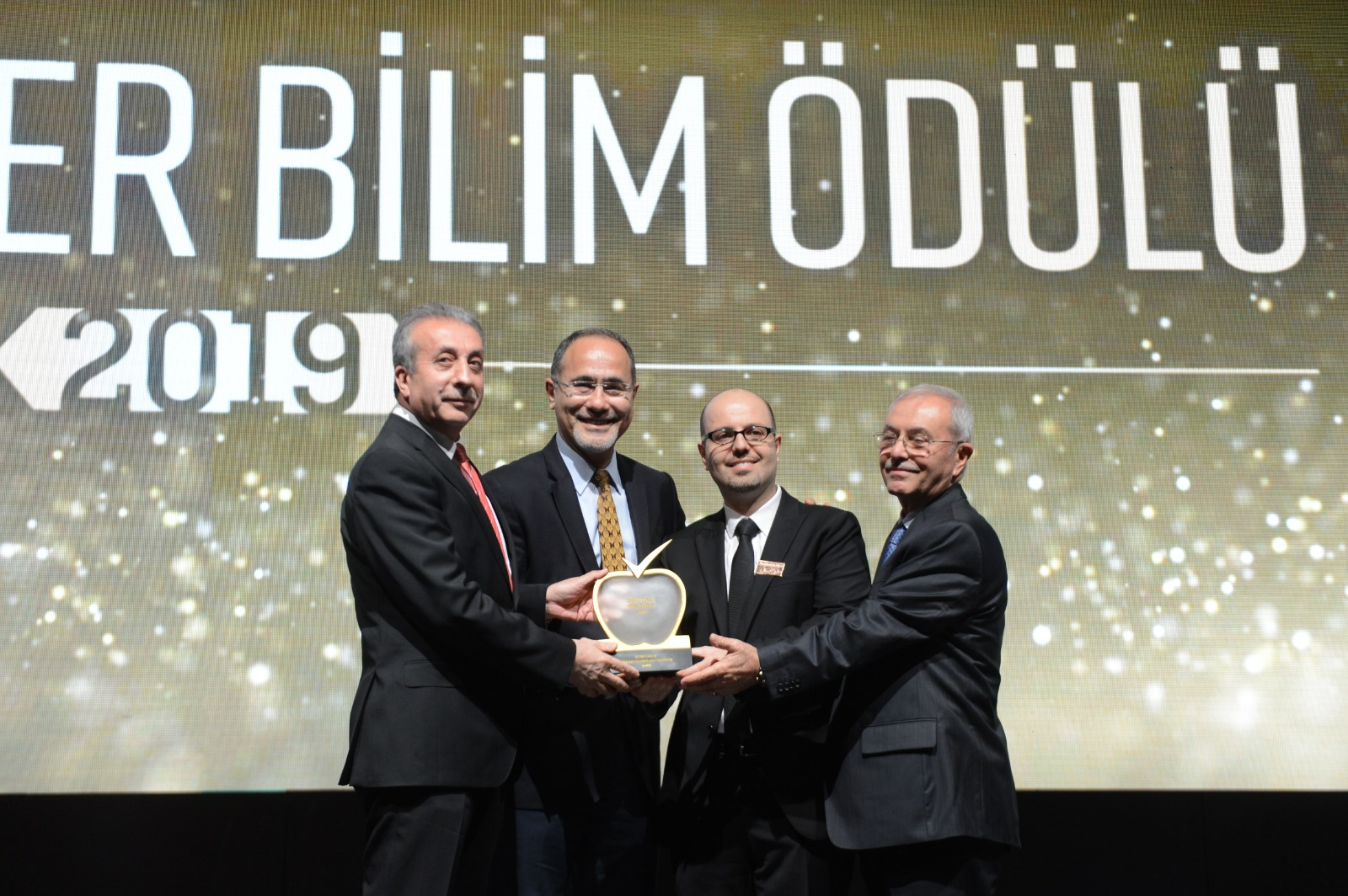
2019
Professor Dr. Tamer Önder
Koç University, Department of Basic Medical Sciences – Medical Biology
Professor Önder completed his bachelor’s degree in Molecular Biology and Genetics at Cornell University and obtained his Ph.D. in Biology at the Massachusetts Institute of Technology (MIT). He joined Koc University as a faculty member in 2012 and advanced in his academic career to attain full professorship. His work focuses on the molecular mechanisms of cellular reprogramming, and he concentrates on designing new disease models using stem-cell technology for rare genetic disorders such as familial Mediterranean fever. In 2018, he was awarded the TÜSEB Aziz Sancar Young Investigator (Encouragement) Award, and in 2019 he received the Sabri Ülker Science Award, recognizing his continued contributions to science.
Research Focus
Guided by principles of cell-based therapeutic approaches, Professor Önder and his team aim to develop new therapeutic strategies by generating disease models for rare metabolic disorders. A key contribution of their work is the creation of a new liver-organoid method derived from iPSC-derived liver organoids that mimic liver development, are highly reproducible, rapid, and efficient. It is estimated that producing iPSC-based organoids for various genetic, metabolic, and chronic diseases could significantly accelerate the development of novel therapeutic strategies. Patient-specific liver organoids hold considerable potential in this respect. In one specific case, a urea-cycle disorder was modeled using patient-derived iPSCs, and it was demonstrated that hepatic organoids derived from these iPSCs could faithfully recapitulate the metabolic aspects of the disease.