
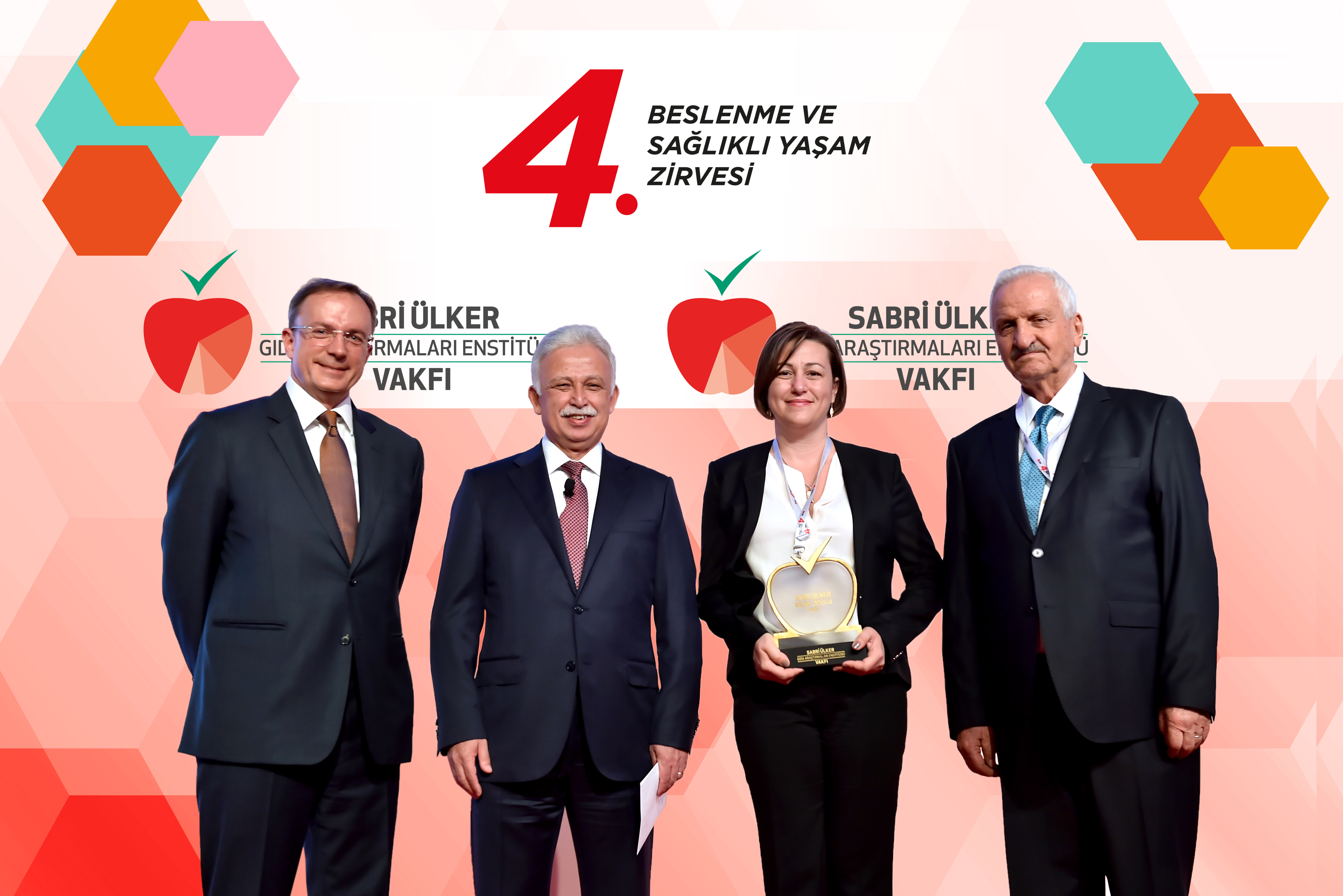
2017
Assistant Professor Dr. Ebru Erbay
Bilkent University, Department of Molecular Biology and Genetics
Ebru Erbay is an Adjunct Assistant Professor in the Department of Molecular Biology and Genetics in Bilkent University in Ankara, Turkey since 2010 and serves as Adjunct Professor in the Institute for Cardiovascular Prevention at the Ludwig Maximillianf University in Munich, Germany as of 2016. She earned her medical degree from Ankara University, then completed her Ph.D. in Cell and Structural Biology at the University of Illinois (Urbana–Champaign). Following her doctorate, she pursued postdoctoral training with Professor Gökhan Hotamışlıgil at Harvard University’s School of Public Health. She is the first researcher in Turkey to receive the Establishment Grant in Life Sciences. She has been honored with various distinctions and graduated from Ankara University Faculty of Medicine with high honors. In 2017, her work entitled “Bioactive Lipids for Health” earned her the Sabri Ülker Science Award. In her research, she demonstrated — contrary to prior assumptions — that palmitoleic acid (previously thought to be harmful) has a protective effect. In a study on mice fed with very high-calorie diets, she showed that this unsaturated fat helps remove harmful saturated fats from cell structures, preventing lethal atherosclerosis. Her research was published in Science Translational Medicine, a high-impact journal in life sciences.
Research Focus
De novo lipogenesis (DNL) — the conversion of glucose and other substrates into lipids — is generally associated with ectopic lipid accumulation in the liver, metabolic stress, and insulin resistance. However, organ-specific DNL can also produce independent lipids with beneficial metabolic bioactivity, drawing interest for their potential therapeutic use in metabolic diseases. One such bioactive lipid, palmitoleic acid (PAO), regulates lipid metabolism in the liver; when produced de novo from adipose tissue, it can enhance glucose use in skeletal muscle. Her findings suggest that oral supplementation of DNL-derived lipids like PAO may promote membrane remodeling associated with metabolic resistance in intercellular organelles, suppressing the progression of lipid stress and atherosclerosis. These results support therapeutic PAO supplementation as a potential protective approach against complex metabolic and inflammatory diseases, paving the way for further studies in humans.